

Why Ancient Woodland Rewards a Circular Walk
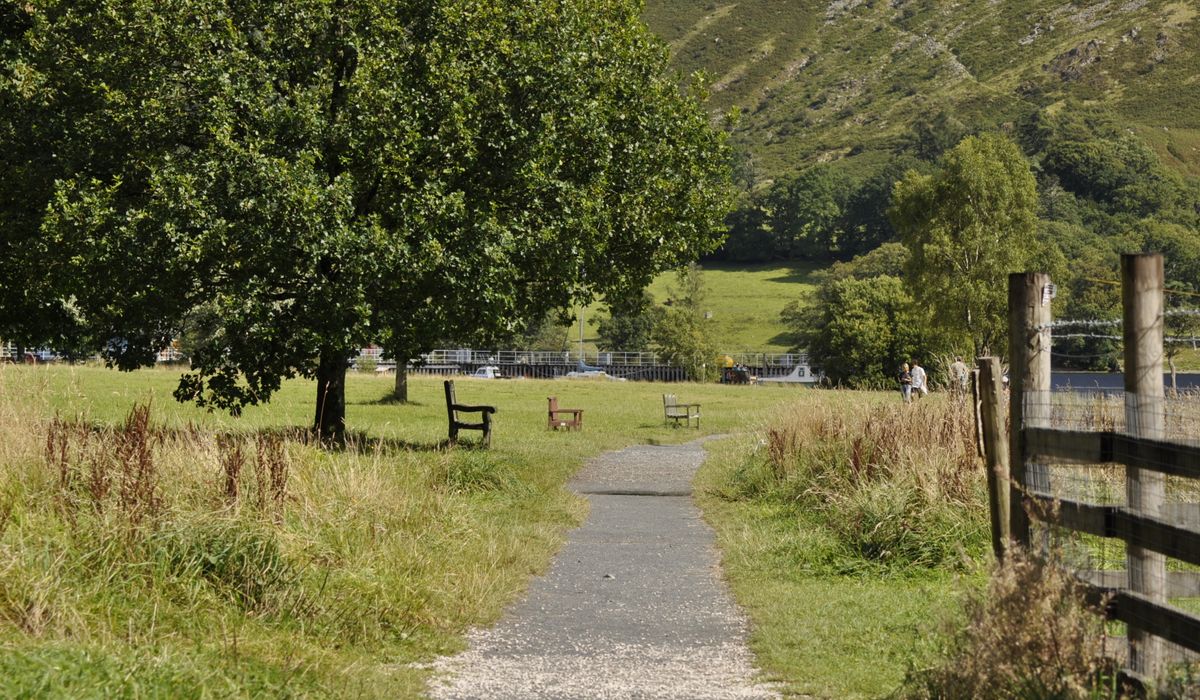
Ancient woodland is a technical term, not a compliment. In Britain it describes land that has been continuously wooded since at least 1600, and that unbroken history leaves marks you can learn to read on a slow afternoon. Bluebells, wood anemone, dog's mercury and wild garlic are all clues, known as ancient woodland indicators, because they spread so slowly that a wood which has been cleared and replanted rarely gets them back. Look also for veteran trees with wide, stag-headed crowns, and for coppice stools: knuckled stumps where generations of cutting has swollen the base. A well-planned loop takes you past several of these, because a circular route lets you follow one path in and return by a lane, a field edge or a second bridleway, so the light, shelter and views keep changing. My own preference is for a route of four to six miles with a bench or a fallen trunk roughly halfway — long enough to feel like an expedition, short enough to enjoy the following day.
Plan the Route on Paper Before You Go
Choose a map at 1:25,000 scale, which shows field boundaries, contours and rights of way in enough detail to plan a sensible loop from your kitchen table. Photograph screen maps are useful for inspiration, but they are no substitute once you are under a canopy in a damp valley with a flat battery. Buy the paper sheet, or print a section, and carry it in a clear plastic case.
- Mark your start point, the nearest parking or bus stop, and a grid reference you can quote to someone else.
- Trace the loop with a pencil and note the total distance and the number of stiles and gates.
- Check the contour lines. A wood on a scarp slope will be far steeper than the map suggests when paths are greasy with leaf litter.
- Identify at least one short cut back to the start, in case weather turns or a path is closed.
- Write your route and expected return time down for someone at home.
Pack a compass even if you rarely need it, plus a waterproof layer, water, a snack and a whistle. Woodland blocks GPS signals surprisingly well, and a footpath that vanishes under brambles can cost you half an hour.
Learn to Read Rights of Way and Permissive Paths
On a detailed map, the line types tell you exactly who may use a path and how secure your access is.
- Public footpath — on foot only. Stiles and kissing gates are common, and you may not take a bicycle.
- Public bridleway — walking, horse riding and cycling.
- Restricted byway — adds horse-drawn and some motor vehicles.
- Byway open to all traffic — rare, and often a muddy rutted lane in practice.
- Permissive path — granted by the landowner and shown differently on the map. It can be withdrawn or closed on set days, so treat it as a privilege rather than a right.
- Open access land — usually a pale wash on the map, but check for local exclusions, seasonal restrictions or a ban on dogs.
If the map shows a stile that is no longer there, look for a waymark disc or an arrow on a gatepost. Paths are sometimes legally diverted, and the map edition in your hand may be a few years old.
Check for Closures and Seasonal Sensitivities
Woodland is a working place. Felling for ash dieback or larch disease, timber extraction, deer management and shooting all generate temporary closures, and machinery has right of way over walkers. Before setting out, check the landowner's notices at the car park, the parish council noticeboard, and your local authority's rights of way team, who publish temporary closure orders. Never step past a barrier or duck under tape, even if the path beyond looks clear.
Wildlife needs space too. Ground-nesting birds such as woodcock and nightjar are vulnerable between March and July, bluebell colonies are easily trampled into mud, and winter is a sensitive time for deer. If a path is closed, take the alternative you planned at home rather than improvising through an unmarked plantation.
Gates, Livestock and Countryside Courtesies
The oldest rule is still the best one: leave gates as you find them. A gate standing open may be open for a reason, such as moving livestock or giving access to a water trough; a closed gate should be closed behind you, even if it is awkward with a rucksack. Use stiles rather than climbing walls, and keep to the line of the path across crops and pasture.
- Keep dogs on a short lead around livestock and between March and July near nesting birds; some access land excludes dogs entirely.
- Take all litter home, including fruit peel and dog bags.
- Leave fallen deadwood where it lies — it is habitat, not firewood.
- Do not pick flowers, dig plants or collect fungi without permission.
Read the Heritage Written into the Trees
Half the pleasure of a woodland walk is noticing what people did here before you. Flat, blackened circles in the leaf litter are old charcoal hearths, where colliers burned coppiced wood for the iron industry. Rectangular hollows may be saw pits, where two men worked a pit-saw over timber. Long banks and ditches running through the trees are often ancient wood boundaries, sometimes centuries older than the oaks standing on them. Pollarded trees, with their knuckle-like crowns above browsing height, show where livestock once grazed the wood. Even the names on your map are evidence: a "Spring" wood was coppiced, a "Pightle" was an enclosed croft, and a "Great Wood" beside a "Little Wood" usually means one was carved out of the other. Walk the same loop in four seasons and it will never quite feel like the same route twice.



John Doe
14 January, 2022Having no content in post should have adverse..
Chauffina Carr
10 April, 2022We use these tests all time! Killer stuff!
Jim Séchen
16 July, 2022Thanks for all the comments, everyone!