

What Countryside Stewardship Is, and What It Is Not
Countryside Stewardship is the main agri-environment programme in England. Put simply, it pays you to manage land in ways that benefit wildlife, water, soil and the historic features of the landscape. In return for an annual payment per hectare or per unit, you take on a set of management options for the length of the agreement — usually five years for Mid Tier, longer for Higher Tier — and you can often add a capital grant for one-off work such as hedge laying, fencing or planting.
It is not a subsidy for doing nothing, and it is not a substitute for a profitable farm. The payments are modest. The holdings that do best out of it are those where the options fit naturally onto land that was already awkward, unproductive or ecologically interesting — a wet corner, a steep bank, a shaded headland, a hedge that was overdue some attention anyway.
The Sustainable Farming Incentive now sits alongside the older scheme, and many farmers run both. Before you commit to anything, it pays to walk the land with a plan in mind rather than a payment sheet.
Hedgerows: Usually the Best Value on the Farm
For most mixed and arable holdings, hedgerows offer the quickest return for the least disruption. On a good hedge, the standard management option is a cutting rotation — typically no more than once every two years, and preferably every three — with no cutting at all between 1 March and 31 August. That single change protects nesting birds, lets berries form for wintering thrushes and small mammals, and saves you a pass with the flail.
Alongside that, look at:
- Hedgerow trees — identify and protect mature and veteran trees within the line, and consider gapping up where the canopy has broken down.
- Capital works — laying, coppicing and replanting are usually supported as one-off items, and they transform a gappy, over-trimmed hedge within a season or two.
- Buffer strips alongside hedges — a narrow uncropped strip reduces spray drift and gives ground-nesting birds and beneficial insects somewhere to live.
Measure your hedges in metres before you apply; a hundred metres sounds trivial, but on a 200-acre holding the total quickly reaches several thousand, and that adds up.
Field Margins and Headlands
Margins are where arable farming and wildlife meet, and they are extremely flexible. Common choices include a six-metre flower-rich margin, a pollen and nectar mix, or a winter bird food plot. The trick is to match the option to the ground rather than the other way round.
- Awkward corners and shaded north edges suit tussocky grass margins, which are cheap to establish and valuable for invertebrates and small mammals.
- Sunny, sheltered headlands are ideal for flower-rich or nectar mixtures, which support pollinators and the predators that help with aphid control.
- Productive land rarely justifies a margin unless you have a specific species in mind — such as grey partridge or corn bunting — where the whole-field picture matters more than the margin itself.
Bear in mind establishment costs: seed, cultivation and, in a dry spring, the risk of failure. Budget for a second sowing on lighter soils.
Water Quality and Catchment Options
Anything that leaves a field at the top of a ditch ends up in the river. That is why water quality options are often the most satisfying to deliver, because you can see the result in a single heavy shower.
The core measures are straightforward: a four- to six-metre grass buffer strip along cultivated land next to a watercourse; fencing to keep livestock out of the channel and off poached banks; and providing alternative drinking points or crossings so stock still have access to water. On heavier land, silt traps, in-field cover crops and reduced cultivation all cut sediment and nutrient losses.
Keep in mind that some of this is already required of you as a baseline — you cannot be paid for work the rules already demand, such as leaving an unfertilised strip beside a watercourse. Understand where your obligation ends and the paid option begins.
Woodland, Orchards and Historic Features
Woodland options reward patience. Creating new woodland, managing neglected broadleaved woodland, restoring wood pasture and parkland, and caring for traditional orchards are all supported, though the payments rarely cover the full cost of establishment on good arable land. They suit marginal ground, wet hollows and land you would struggle to farm profitably anyway.
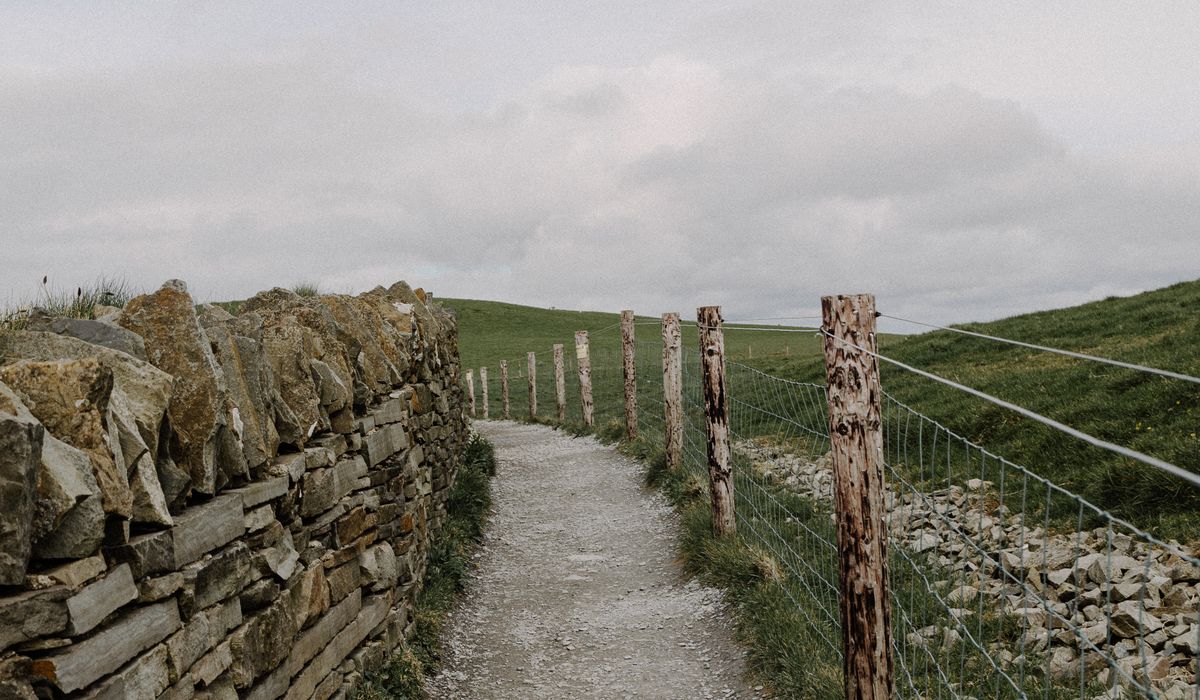
Rural heritage is often overlooked. Dry stone walls, stone-faced banks, historic field boundaries, dew ponds and old farm buildings all carry the marks of how the landscape was worked, and capital grants are available to repair them properly. Repairs done with the right materials and techniques last for generations; repairs done cheaply do not.
Assessing Your Options Before You Apply
Start with a simple map of what you already have: hedge lengths, watercourses, existing woodland, unproductive corners, and any land already in a scheme. Then walk the farm in winter, when hedges are bare and wet ground is obvious.
- Check compatibility — some options cannot be stacked on the same parcel, so test combinations before you commit.
- Be realistic about maintenance — every option has to be delivered for the whole agreement, and undelivered options can mean money clawed back.
- Front-load capital works — hedges laid and fences erected early in an agreement start delivering for the rest of the term.
- Take advice early — an independent adviser or a local environmental charity will often spot options you would have missed.
Above all, choose the options that make sense on your land. A well-fitted agreement quietly improves the farm for a decade; a poorly fitted one becomes a paperwork burden you resent by year two.



John Doe
14 January, 2022Having no content in post should have adverse..
Chauffina Carr
10 April, 2022We use these tests all time! Killer stuff!
Jim Séchen
16 July, 2022Thanks for all the comments, everyone!