

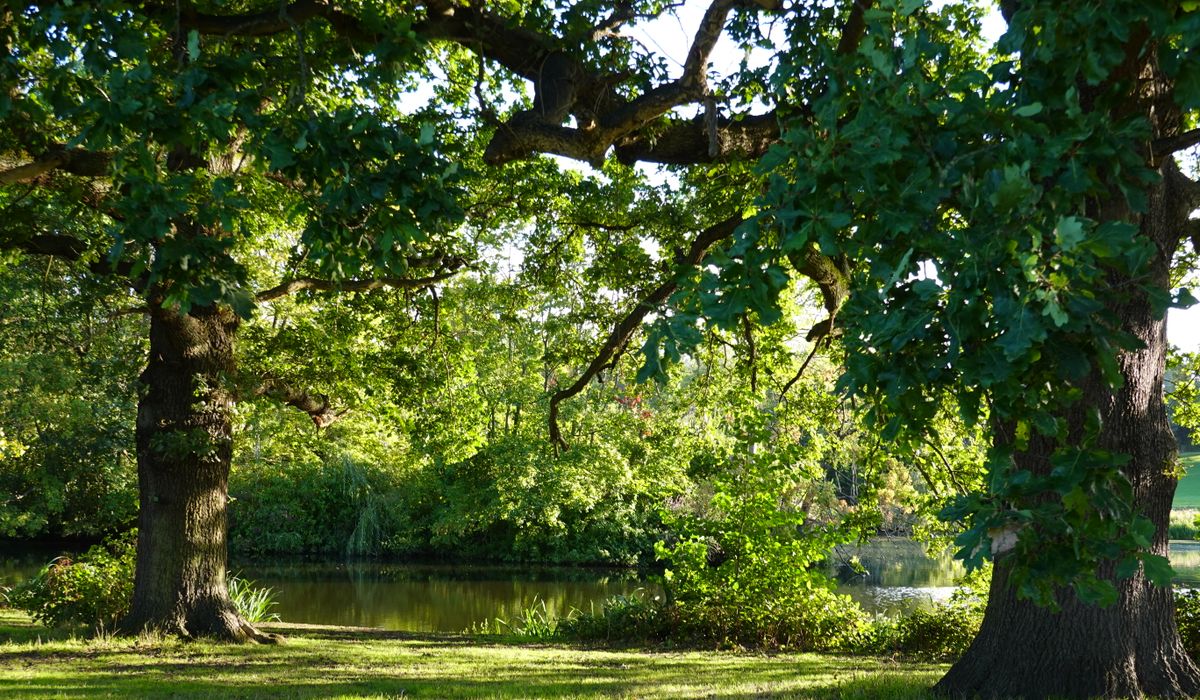
What Is Hedge Laying?
Hedge laying is the craft of cutting and bending the living stems of a hedgerow so that they lie at an angle and re-grow from the base. The stems — known as pleachers — are only partly severed near ground level, leaving a sliver of bark and sapwood intact to carry water and nutrients. Bent over and pinned in place, they push up fresh shoots along their length, thickening the whole structure from the bottom upwards.
Done well, the work is invisible within a year. The hedge looks battered the winter you finish it, then erupts the following spring into a dense, thorny barrier that will stand for fifteen to thirty years before it needs laying again.
Why a Hedge Needs Laying
Left alone, a hedgerow turns into a line of trees. The thorn bushes grow upwards, the base becomes bare and gappy, and the value of the boundary collapses. Livestock walk through it. Birds that need dense, low nesting cover — dunnocks, whitethroats, yellowhammers — move elsewhere.
Laying solves this in one operation. Cut low and laid over, the stems keep the hedge at a manageable height while the base is forced to thicken. New shoots rise from the cut points and from the stool itself. The result is a boundary that is stock-proof, weather-tight and dense from the ground up.
It is a matter of heritage as well as husbandry. The skill has been handed down through generations of countrymen in nearly every corner of the British Isles.
Regional Styles
British hedge laying is unusually regional. A craftsman in Devon and one in Yorkshire are doing the same job, yet the hedges they produce look nothing alike. Local materials, local soil, the stock being fenced and centuries of custom all play a part.
- Midland Bullock: The classic Midlands style. Stems laid at roughly forty-five degrees, secured with stakes driven into the hedge line and bound along the top with twisted hazel or willow. Strong, long-lived and a good style for a beginner to learn.
- Devon and Somerset: Laid on top of a raised earth bank, cropped fairly high and held with crooks — turned wooden stakes — and binds of bramble. Taller and more billowy than Midland work, with banks that are a habitat in their own right.
- Yorkshire: Stems cut almost square and laid in groups, cross-stitched between one another, often with no staking or binding at all. Slow and precise.
- Derbyshire: A tight, low style, stems laid close together and cut short, traditionally without stakes or binders.
- Westmorland and Northumberland: A hedge grown on top of a stone wall or bank — a form known as a corn ditch or steel and hedge. The wall provides the barrier; the hedge adds shelter.
Add the Welsh border styles, the Southern Counties double-brush and a dozen local variants besides, and no two craftsmen lay quite alike.
Tools of the Trade
The toolkit is small and old-fashioned, and most of it fits in a bag across a shoulder.
- Billhook: The essential tool, and a deeply regional one — the Devon, Yorkshire and Kentish patterns have different blade shapes, each suited to local wood and technique. A sharp billhook with a good handle is the heart of the craft.
- Felling axe or hand axe: For heavier stems the billhook cannot manage.
- Bow saw: For dead wood and stems too thick to pleach cleanly.
- Beetle or mallet: A heavy wooden mallet for driving stakes without splitting them.
- Stakes and binders: Hazel, sweet chestnut, willow or ash for stakes; hazel, willow or bramble for binders, cut from a local copse where possible.
- Protective kit: Thorn-proof gloves, eye protection and heavy leg wear. A laid hedge fights back.
A Lifeline for Wildlife
A well-laid hedge is one of the richest habitats on a farm. The dense base shelters hedgehogs, voles, shrews and amphibians, and gives nesting cover to a long list of farmland birds. Flowers and berries — hawthorn, blackthorn, hazel, elder, dog rose — feed pollinators in spring and birds and dormice in autumn.
The partial cuts made during laying leave small amounts of dead and decaying wood in the hedge, valuable for beetles, fungi and a surprising range of invertebrates. The hedge also acts as a corridor, letting wildlife move between woods and fields without crossing open ground.
Laying is not merely tidying a boundary. It resets the biological clock of an old hedge and gives it another two or three decades of life.
Keeping the Craft Alive
The laying season runs from the end of the growing season to early spring, roughly late September to early March. Outside that window, nesting birds and rising sap make the work damaging as well as difficult; in England and Wales, cutting hedgerows between 1 March and 31 July is restricted by the Hedgerows Regulations.
Good practice is to lay a hedge in sections rather than all at once, leaving part of it tall for a season or two. The wildlife value is never entirely removed, and the craftsman has a fallback if the weather turns.
The craft survives through local hedge laying associations, county shows and courses run by wildlife trusts and agricultural colleges. If you have a hedge on your land, or simply admire one, there has rarely been a better time to learn. A February day bent over a billhook is hard work — and one of the most satisfying you can spend in the British countryside.



John Doe
14 January, 2022Having no content in post should have adverse..
Chauffina Carr
10 April, 2022We use these tests all time! Killer stuff!
Jim Séchen
16 July, 2022Thanks for all the comments, everyone!