

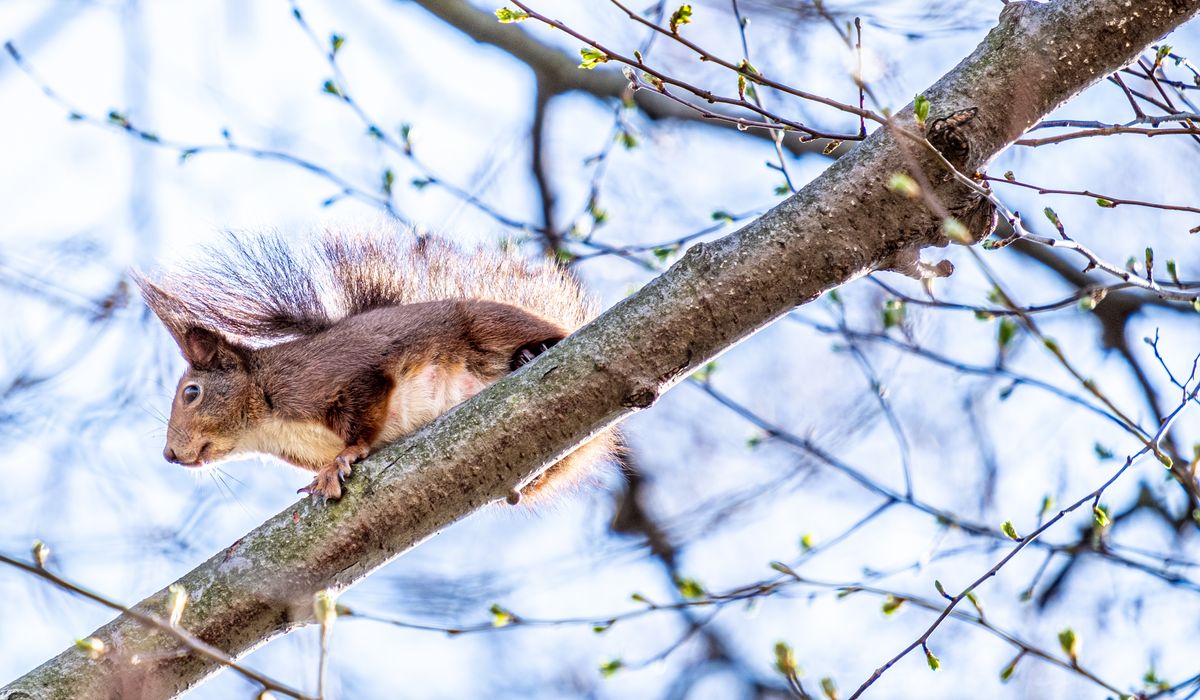
There are perhaps 140,000 red squirrels left in Britain, and the great majority of them live north of a line running roughly from the Mersey to the Humber. For those of us who walk the conifer woods of Northumberland, the pine belts of Cumbria or the sandstone ridges of Merseyside, that is both a privilege and a responsibility. Protecting them is not a nostalgic exercise. It is practical, local work — the sort of work that neighbours, woodland owners and volunteer groups do together, season after season.
Why the Northern Strongholds Matter
Red squirrels cling on in the north for good reasons. Large blocks of conifer woodland, thinner grey squirrel populations and active local conservation effort all help. Kielder and the surrounding Border forests, the Eden Valley and the northern Pennines, the Formby pinewoods, and the mixed woods of the North York Moors and Yorkshire Dales are all important. These areas are not just refuges; they are the reservoirs from which reds might one day spread back into suitable habitat further south.
There is also a heritage dimension. Red squirrels appear on pub signs, in place names and in the folk memory of upland parishes. A wood without them feels diminished, and the skills involved in looking after them — careful woodland management, patient surveying, humane grey control — are part of a wider rural craft tradition worth keeping alive.
Competition, Disease and the Squirrelpox Threat
Grey squirrels are the main problem, and they cause trouble in two ways. First, they compete. Greys digest acorns and other hard mast more efficiently, breed earlier and produce more young, so reds are gradually squeezed out of broadleaf woodland. Second, and more seriously, greys carry squirrelpox virus. They shrug it off; reds almost never do. An outbreak can kill the great majority of reds in a wood within a few weeks, and it travels fast through a local population.
This is why the front line is not one wood but a group of woods. Where greys are absent or kept scarce across a buffer zone, reds survive. Where greys move in unchecked, reds disappear — often within a decade, and sometimes much faster.
What Good Woodland Looks Like for Reds
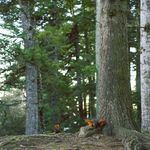
Reds do best in mixed and coniferous woodland with a reliable autumn crop. Scots pine, Norway spruce, larch and lodgepole pine all suit them well, especially where there is a mix of ages. Pure oak and beech woods, by contrast, tend to favour greys.
- Retain mature cone-bearing trees rather than felling them all in one rotation.
- Keep woodland connected. Hedgerows, shelterbelts and small copses let reds move without crossing open ground.
- Leave some deadwood and dense thicket for drey sites and safe routes through the canopy.
- Plant for the long term with species that feed reds more reliably than they feed greys.
Woodland grants often reward this kind of thinking, and a local red squirrel group will usually be glad to advise on a management plan before any felling or planting begins.
Feeding Stations and Day-to-Day Care
Supplementary feeding can genuinely help reds, particularly in late winter and early spring when natural food is scarce and breeding females need support. It also brings squirrels into view, which makes surveying far easier and gives visitors a reason to care.
The rules are simple. Feed hazelnuts, sunflower hearts and maize in small, regular amounts. Use a feeder with a baffle or a long tunnel that greys cannot easily negotiate. Clean and rotate feeders weekly with hot water and a mild disinfectant, and never let food go mouldy. Most importantly, do not feed greys. A well-stocked bird table in a village with greys present is effectively a grey squirrel canteen, and it can draw them straight towards a red wood.
Support Your Local Group and Record Every Sighting
Local red squirrel groups do the unglamorous work: monitoring dreys, organising surveys, advising landowners, arranging training, and coordinating grey control across a whole parish rather than a single garden. They usually need volunteers for surveys, help with public events, and donations for equipment and feeders.
Recording sightings is just as valuable. Note the date, a six-figure grid reference if you can, whether the animal was red or grey, and whether it looked healthy — hair loss around the eyes, nose and paws can indicate squirrelpox. Pass records to your local group or biological records centre promptly, and report suspected disease cases immediately rather than waiting. A single report can trigger a swift response that saves a whole wood.
Grey Squirrel Management: Where It Is Appropriate
Grey control is legal in the UK, but it must be done properly. The aim is never extermination; it is to hold grey numbers low enough in defined buffer zones that reds can persist and spread. Random, uncoordinated effort rarely achieves much, because greys recolonise gaps quickly.
If you own or manage land near a red population, speak to your local group and to the relevant conservation or forestry body first. Trained and experienced operators should carry out any trapping or shooting, following current welfare guidance, and effort should be sustained over a defined area and reviewed each year. Done well and collectively, it works — the recovery of reds in parts of North Wales and northern England shows what steady local effort can achieve. Done carelessly or in isolation, it wastes time and can do more harm than good.


John Doe
14 January, 2022Having no content in post should have adverse..
Chauffina Carr
10 April, 2022We use these tests all time! Killer stuff!
Jim Séchen
16 July, 2022Thanks for all the comments, everyone!